

Category
Schedule
Pre-training: Tuesday, January 13, 2026 *Online, In-person training: Monday, January 19 - Friday, January 23, 2026, Total 6 days
Country / Member
- Brunei Darussalam
- Cambodia
- Indonesia
- Lao People's Democratic Republic
- Malaysia
- Myanmar
- Philippines
- Singapore
- Thailand
- Viet Nam
Target
For Government Officials and Business Leaders from Developing Countries
Participants
16 executives from companies and economic organizations recommended by overseas counterparts
This training program, which began in 1980, has been attended by over 480 corporate executives to date, and this is its 46th iteration.
The training theme is “What actions should Japan and Asia take together after the Osaka-Kansai Expo 2025?”, and the program’s objectives are twofold:
① To enable participants to recognize the management challenges of their respective countries, learn together, and understand Japanese case studies.
② To foster exchanges that transcend national and cultural boundaries through the program, build a foundation for mutual cooperation, and strengthen future relations.
Prior to the training in Japan, the Japan Association for the 2025 World Exposition provided an online presentation on event design during the expo, project review, and daily improvement efforts, with the aim of providing valuable insights for ASEAN countries when hosting international events, not just World Expos, in the future.
The following week, we visited large corporations, the world’s oldest company with a rich tradition and history, small and medium-sized manufacturing companies undertaking innovative initiatives, and an academic research city, according to the program designed to showcase various perspectives. We also had the opportunity to experience Japanese history by visiting Shitennoji Temple, Japan’s oldest official temple and the head temple of the Washu sect.
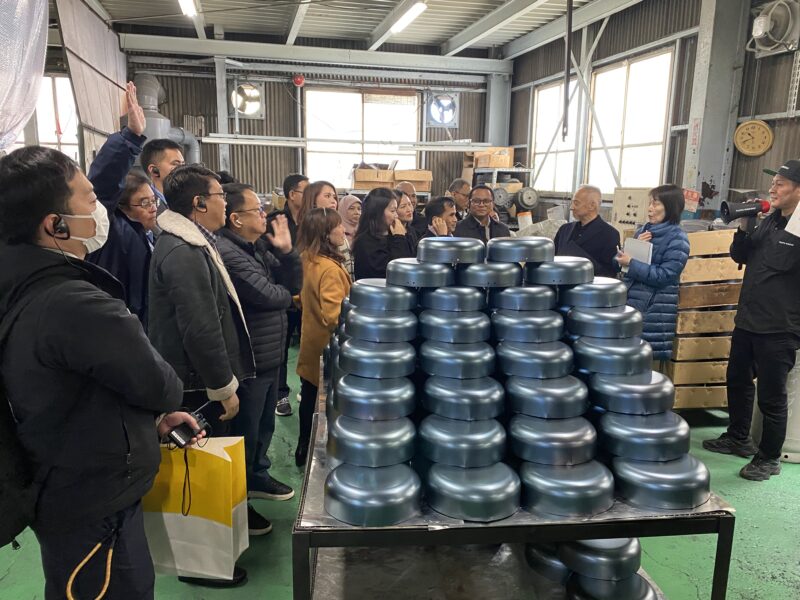
【Participants observing the manufacturing process at a small-to-medium-sized enterprise in Osaka.】
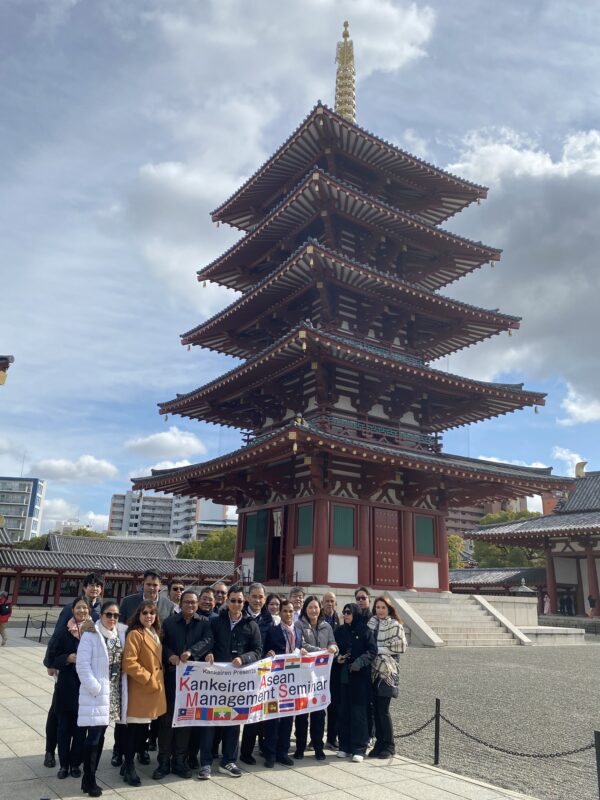
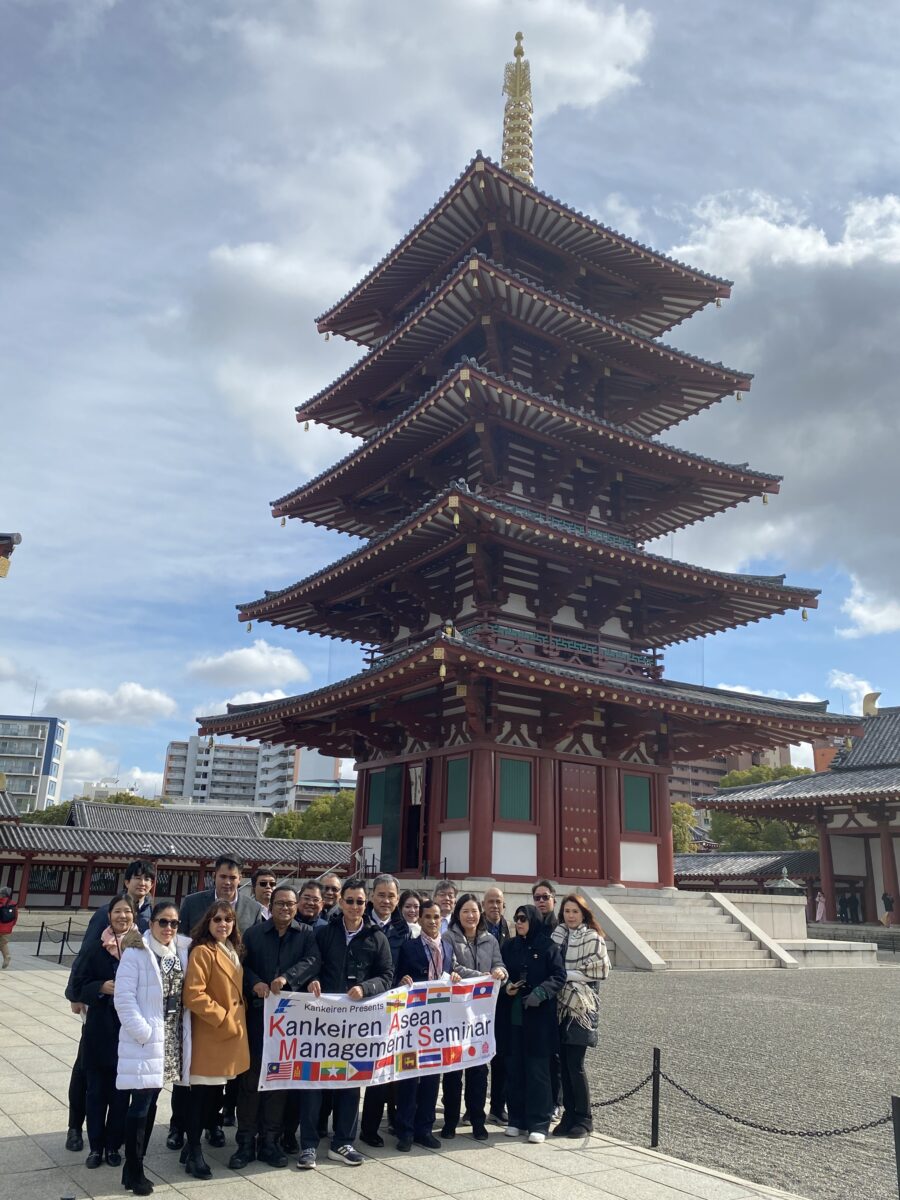
【Group photo at Shitennoji Temple: After receiving an explanation of the temple complex, we visited the five-story pagoda.】
The participants were executives from companies in different industries, so they gained different perspectives from the company visits and shared those learnings in subsequent discussions. Many participants had also expressed their desire to build a good network through the training before coming to Japan, and they deepened their interactions with the visited companies, as well as with each other.
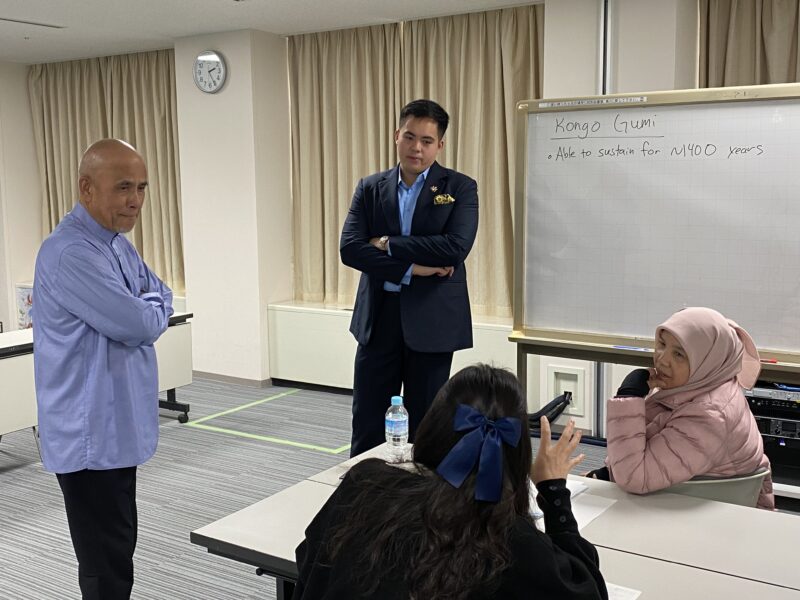
【Participants divide into groups to discuss the “lessons” they learned from their visit.】
On the final day of the training, participants shared numerous comments such as, “I learned a lot from the attitude of Japanese small and medium-sized enterprises in tackling challenges,” and “I felt the high quality and the diligence of the Japanese people that supports it.” We believe that the initial objectives of this training were fully achieved through the company visits, lectures, and discussions.
Schedule
Pre-training: Tuesday, January 13, 2026 *Online, In-person training: Monday, January 19 - Friday, January 23, 2026, Total 6 days
Course Leader
Kenta Goto, Professor, Faculty of Economics, Kansai University
Client Organization
Kansai Economic Federation
SDGs
Persons in Charge
Kojima, Kawaji, Basnet

