

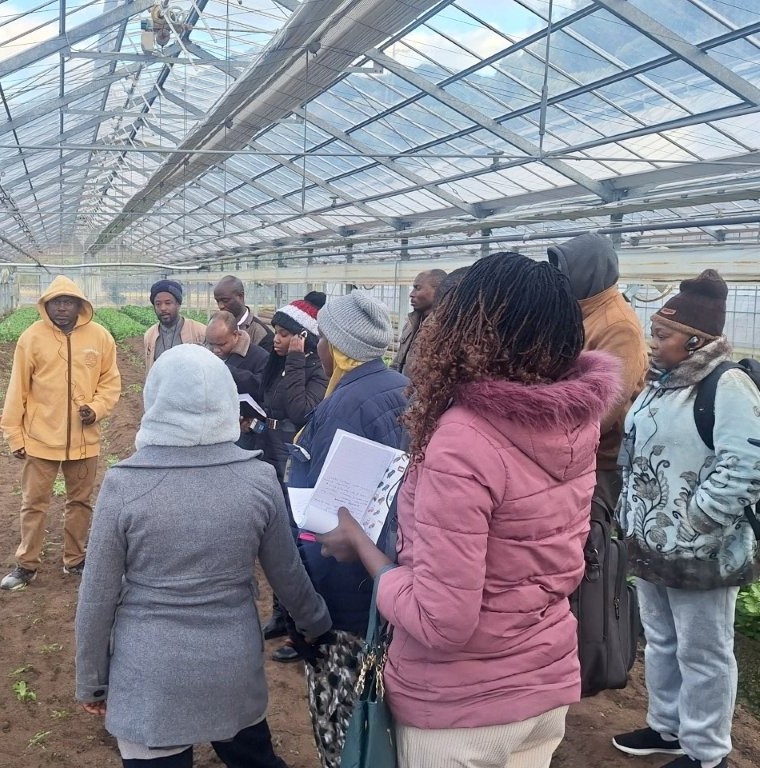
Farm Visit
Category
Schedule
November 27th – December 12th, 2025 *Training period
Country / Member
- Liberia
- Uganda
- Barbados
- Ethiopia
- Ghana
- Grenada
- Kenya
- Malawi
- Nigeria
- Rwanda
- South Sudan
- Tanzania, United Republic of
Target
For Government Officials and Business Leaders from Developing Countries
Participants
Officials from central government ministries and agencies, or local governments responsible for agricultural guidance/extension (17 participants)
As with the SHEP Training Course (A) held between May and June, this training course was designed for government officials responsible for agricultural guidance and extension in African and Caribbean countries. The course aimed to deepen participants’ understanding of the SHEP Approach* through lectures and on-site visits, enabling them to promote and expand it in their respective countries.
Please refer to the following page for an outline of this training course and details of the SHEP Approach.
Market-Oriented Agriculture Promotion—SHEP Approach—for Africa (English) (Administrator) (A)
Following the SHEP Training Course (A), officials responsible for SHEP Approach promotion projects and those in charge of agriculture in their respective countries participated in this training course. This time, in addition to participants from African countries, two participants from Caribbean countries (Barbados and Grenada), which are planning to implement the SHEP project in the future, joined the course, thereby promoting further mutual learning. The sharing of experiences by participants from African countries and the active questions raised by participants from Caribbean countries helped both parties gain new insights.
In this program, participants learned about the roles of each stakeholder in Japan’s agricultural sector at lectures, followed by visits to related facilities such as an agricultural extension center, an agricultural cooperative, and wholesale markets, where they were able to hear directly from specialists. During the visits, participants asked thoughtful questions to seek ideas that could be applied in their respective countries, while gaining an understanding of systems unique to Japan. In particular, when visiting facilities related to their work, they asked more specific and detailed questions. In addition, when visiting a women’s farming group and a farm family that had successfully taken over the family farming business, many participants were deeply impressed by the farmers’ creativity and perspectives.
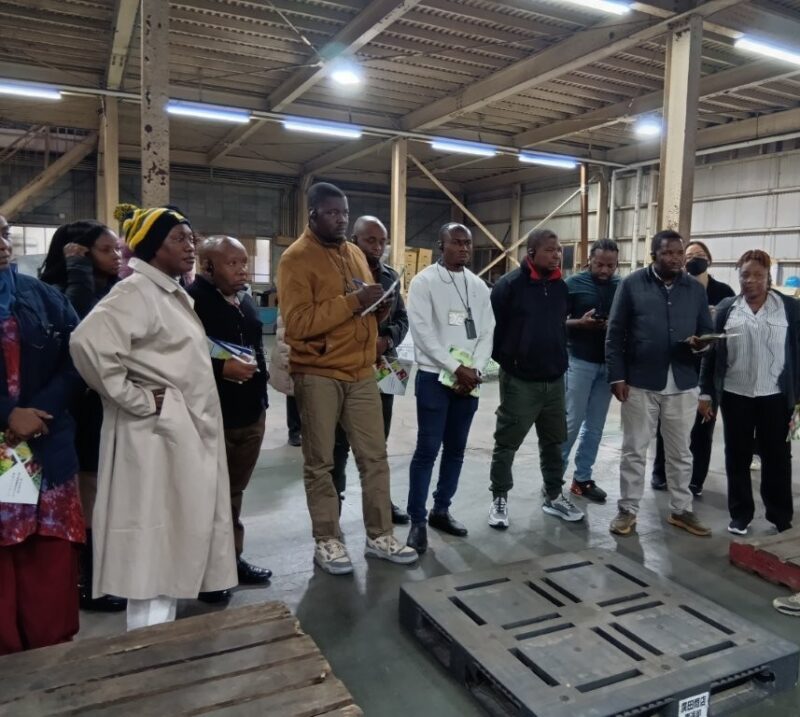
Site Visit
Farm Visit
During the SHEP exercise at the final stage of the training course, group work using actual cases was conducted to examine how to approach and solve the issues. On the final day, the training course in Japan concluded successfully with each participant presenting an action plan for implementing the SHEP Approach in their own country after returning to their home country.
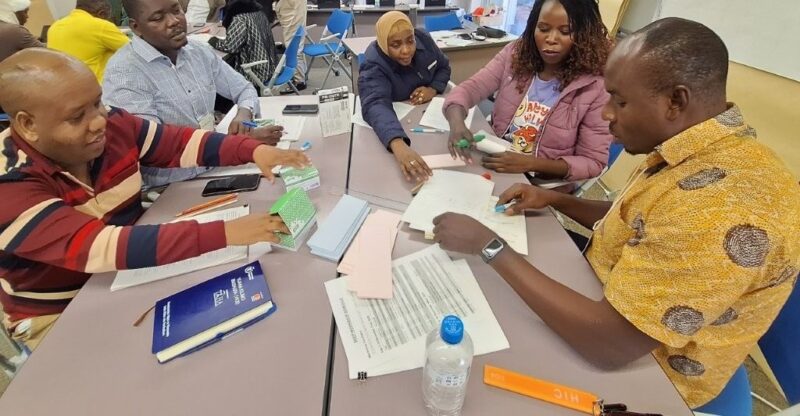
Workshop
This training course was designed to enable all participants to learn through the same core concept—the SHEP Approach. It was particularly impressive that discussions based on the common theme deepened and that practical ideas, taking into account the differences and similarities among participants’ countries, were actively exchanged. We look forward to the progress review meeting in six months’ time to hear how they will put what they have learned into practice.
Schedule
November 27th – December 12th, 2025 *Training period
Course Leader
Harue Kitajima (International Cooperation Specialist, JICA Economic Development Dept.)
Client Organization
JICA Kansai
SDGs
Persons in Charge
Saga, Kimura, Funami
Instructor / Visited sites
JICA Project Specialists, JICA International Cooperation Specialists, etc. (15 lecturers/locations visited)

