

Schedule
June 25th – July 24th, 2025 *Training period
Country / Member
- Cuba
- Egypt
- Jordan
- Lao People's Democratic Republic
- Mongolia
- Nepal
- Pakistan
- Serbia
- Sri Lanka
- Turkmenistan
- Viet Nam
Target
For Government Officials and Business Leaders from Developing Countries
Participants
Administrative officers of central ministries and agencies, local government administrators, and members of other public support organizations such as chambers of commerce and industry, all involved in SME development (11 participants)
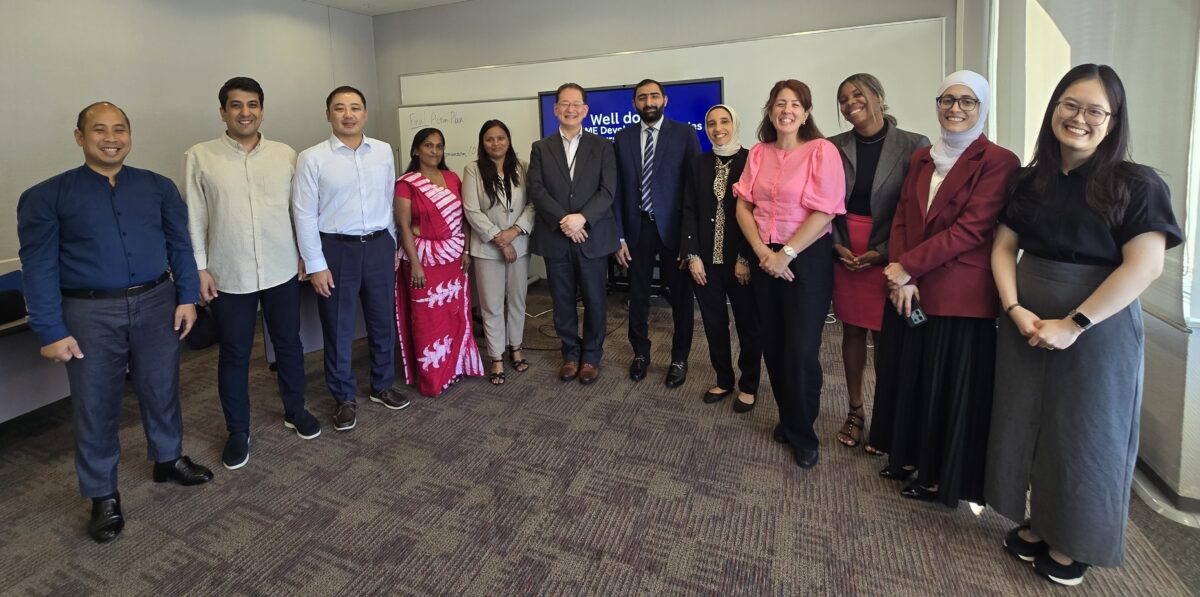
This training program was designed to clarify the challenges facing small and medium-sized enterprises (SMEs) and to strengthen their capacity to formulate effective promotion policies. A total of 11 participants took part in the program, including officials from central ministries and agencies, local government administrators, and members of other public support organizations such as chamber of commerce. In Tokyo, participants attended lectures on policy planning, while in the Kansai region they learned about local-level measures and observed on-site business support activities.
Schedule
June 25th – July 24th, 2025 *Training period
Course Leader
Takumi Hirai (Associate Professor, Mukogawa Women’s University)
Client Organization
JICA Kansai
SDGs
Persons in Charge
Kojima, Basnet , Fukushima
Instructor / Visited sites
Organizations involved in SME support, SMEs and specialists such as SME management consultants, etc. (22 lecturers/locations visited)
JICA Small and Medium Enterprise Development Policies (A)
As in the previous year, this training course included lectures and workshops on “Action Plan Development Using the PCM Methodology.” The PCM method is widely used for project planning in the field of development assistance, and for all participants this was their first opportunity to learn the methodology.
In the final part of the course, participants developed their action plans based on insights gained from the site visits and the challenges faced in their own countries. The action plans were highly feasible, and many participants stated that the methodology could be applied immediately upon their return to their home countries.
This year, a new perspective was also gained through the World Expo 2025 Osaka, Kansai. MOBIO (Monodzukuri Business Information-center Osaka) exhibited at the Osaka Healthcare Pavilion, enabling participants to directly observe SMEs’ approaches to new business ventures and technological development. Moreover, visits to the pavilions of the participants’ respective countries provided a valuable opportunity to understand key national policies and the direction of industrial promotion in each country.
We would like to support the participants’ success by keeping in regular contact with them.

