

【PREX Global Network Interview Vol.5】 Mr. Dejan ANTIKJ (North Macedonia) Vol. 2/4
Passion toward his work and great fan of Japan in North Macedonia!
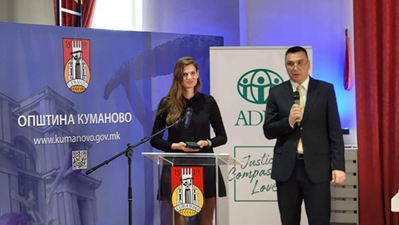
Mr. Dejan Antikj is PREX Global Network(PGN) member who participated in the course on “Training and Dialogue Program Financial and Technological Support for Small and Medium Enterprises Promotion(A)” in year 2011 which was entrusted by JICA.
Even after more than 10 years have passed, PREX staff and Mr. Dejan communicate time to time. And we come to wonder his strong motivation and passion toward his work. And also why he likes Japan so much.
So we decided to have interview session and ask about his career and history.
Starting from today, we will upload his story which divided into 4(four) parts. Every part contain his passion, motivation and positive attitude toward his life.
As a series of 【PREX Global Network Interview 】, interviews of past participants who have interesting background will be uploaded regularly. We hope this articles will bring you some insight and more than that, hope you enjoy these article.
******************************************************************************
Vol. 2
Interview with the PREX Global Member after meeting 13 years ago
His passion to support people and love to Japanese culture
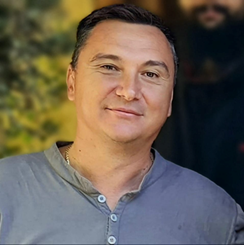
Interview with Mr. Dejan Antic
Where your motivation or power come from?——————-
PREX:
May I ask you something? How do you keep yourself motivated to push for change in your work? As you mentioned, many people prefer stability and hesitate to move forward.
When you try to improve something, don’t you encounter negative reactions or opposition?
Dejan:
That’s a very good question. Throughout this work, I have often asked myself the same thing. Is it really possible to achieve these changes?
If you look at my resume, you’ll see that all of my positions have been in roles that serve the common good. I have always worked to support people and to dedicate myself to their benefit.
I believe it is a God-given gift to devote myself to helping others. I can only do this if I act honestly and work from my heart, not just with my brain.
Of course, logic is important, but if you act with your heart, people can feel that energy. If you speak clearly and confidently, and if you have solid experience and knowledge, then things can be done — no matter where you are.
As I learned in Japan, you simply need to adapt to the circumstances or to the new cultural environment where you are working.
This is the challenge. But I have proven — to God, to myself, and to others — that if you have an honest approach, solid knowledge, and a sincere desire to keep learning, then God will provide you with the necessary tools, the words, and the passion to make things happen.
Nothing stays the same; the world is constantly changing. But people should always strive to use their talents and skills to make the world — or even their own small community — a better place.
I am truly grateful to God for this.
PREX: That’s wonderful — truly inspiring words.
What is the “WOW” things in Japan?————————
PREX:
It sounds like you are making the most of what you learned in Japan. Could you tell me more about this?
Dejan:
Yes, absolutely — I’m truly grateful. Whenever you send me information or updates, it makes me reflect on my CV and look back at what I have been doing, and the positions I have held since returning from Japan.
In my current role, I feel I am applying the lessons from Japan in a very integrated, holistic way. Everything I learned about practical organization is coming into play.
Without outside support — just with my colleagues, my team, and the country director of ADRA North Macedonia, who gives me carte blanche — I am now fully using all the knowledge and skills I gained in Japan, to help the people of Macedonia do a better job.
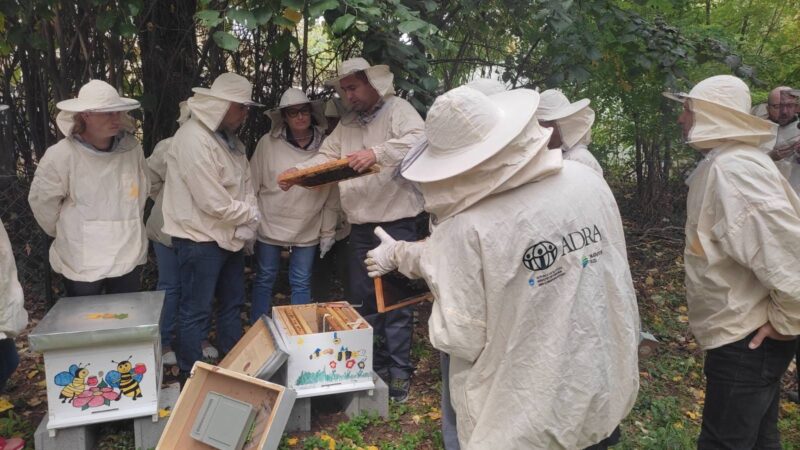
One example is the beekeeping sector, where I am currently engaged. I am applying everything I learned to support and develop that field as well.
Work at ADRA ”Beekeeping Project”————————-
PREX:
I saw on social media that you changed your job to ADRA, a very well-known organization. And now you’re working on a honey project, right? Could you tell me a bit more about this project?
And if you apply your learning in Japan in this project, I appreciate if you tell me about this point also.
Dejan:
Yes, of course. My current position is Program Development Director, so I am responsible for creating and developing new program proposals, as well as overseeing their implementation.
Let me briefly explain how I am applying the knowledge I gained in Japan to this project.
This is a three-year project funded by the Slovenian government, aimed at supporting the growth of the beekeeping industry in North Macedonia. The idea is to help people in Macedonia — both those who are already beekeepers and those who are interested in starting — to improve their knowledge and expand their businesses, so they can earn a better income for their families.
When we started designing this project about a year ago, the Slovenian Ministry of Foreign Affairs, which is the donor, gave us a great deal of flexibility.
Slovenia is one of the most advanced countries in Europe when it comes to beekeeping, with a tradition going back almost 200 years. They decided to help Macedonia and opened a call for NGOs to compete for funding with ideas about what should be done here.

Among many other organizations, my team won the project because we proposed what we felt was the most important and necessary support for the people of Macedonia.
However, when I reviewed the initial project proposal, I saw many inadequacies — things that did not really match the local realities.
So, in close communication with our partners in Slovenia and with their Ministry of Foreign Affairs, we revised the project to make sure we had the right things in right place for a successful implementation.
That was one of the milestones I was able to achieve, of course in coordination with all stakeholders. Then, since I was given carte blanche to manage the project, I made another proposal that was not in the original plan: I insisted on involving top scientists from academia. If we want true success, we need their expertise.
This is something I learned in Japan — you, PREX, showed us so many examples where projects were carried out through cooperation between universities, NGOs, and government officials.
By connecting all these players, you can set common goals, listen to the voices of those who need assistance, and then manage everything around those needs. I was able to bring that approach into this project, and I’m very happy about that.
(to be continued to next article)
- 2026-03-13

