

Category
Schedule
September 14 to 16, 2026
Country / Member
- Kyrgyz
- Laos
- Cambodia
- Bhutan
- Maldives
- Ghana
- Nepal
- Viet Nam
- Mozambique
Target
For International Students
Participants
15 international students from the Graduate School of International Relations, Ritsumeikan University (Master's Program), currently serving as government officials in central and local government institutions in their home countries.
As this program was attended by government officials from various professional fields working at central and local government institutions in their home countries, it was designed to provide opportunities to learn about Japanese corporate management and business activities from both public sector and private sector perspectives.
From the public sector perspective, participants attended lectures delivered by the Kyoto City Government on the themes of support for local enterprises and SMEs, as well as support for startup creation and growth. The lecturer greeted participants in their native languages, creating a friendly atmosphere from the outset. This helped participants feel at ease and encouraged active discussions throughout the session. It was particularly impressive to see participants raise numerous questions while comparing Japan’s policies and support measures with those of their own countries.
From the private sector perspective, participants visited four companies, each with its own unique philosophy and strengths, where they attended presentations and conducted site visits. The program exposed participants to a wide range of business practices, including efforts to build a better society through the employment and inclusion of persons with disabilities, the development of unique technologies in niche markets alongside the cultivation of globally minded human resources, and innovative initiatives to pass on Kyoto’s traditional industries, such as Japanese umbrella making and bamboo craftsmanship, to future generations. By observing these activities firsthand, participants deepened their understanding and reflected on how such approaches could be applied to industrial development and policymaking in their own countries.
【QA session】
Another distinctive feature of this year’s program was that the course leader accompanied participants during the company visits. This enabled participants to share their observations and lessons learned at each site and to continuously connect these insights to the overall objectives of the program. As a result, the final wrap-up session generated lively discussions based on a shared understanding among participants and the course leader, providing a valuable opportunity to consolidate and further develop the knowledge gained throughout the program.
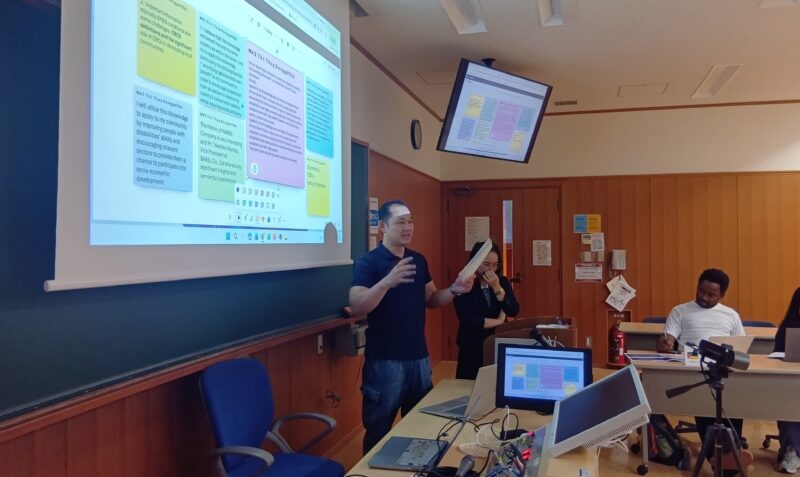
【Final Group Presentation】
This year marked the seventh implementation of the program. Building on the experience gained thus far, we will continue to enhance the program content in response to participants’ needs and emerging global trends, with the aim of providing practical insights that can contribute to economic and industrial development in participants’ home countries.
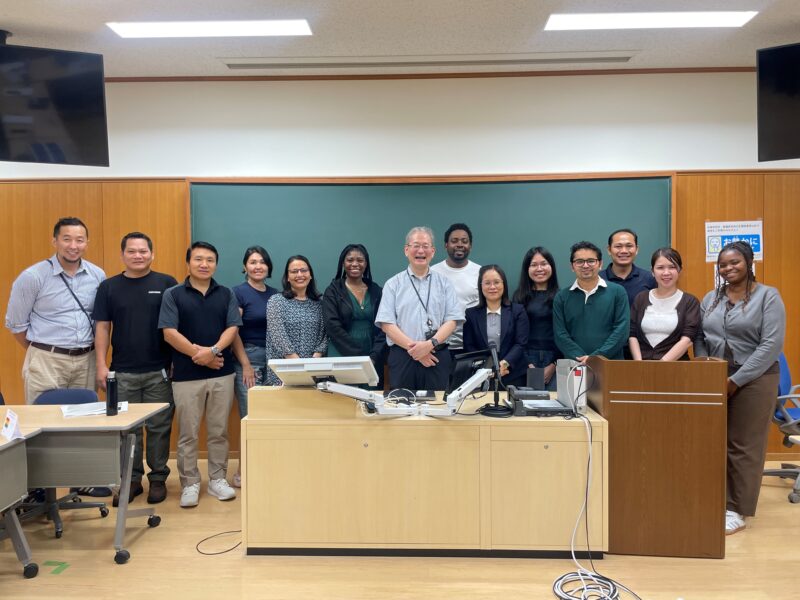
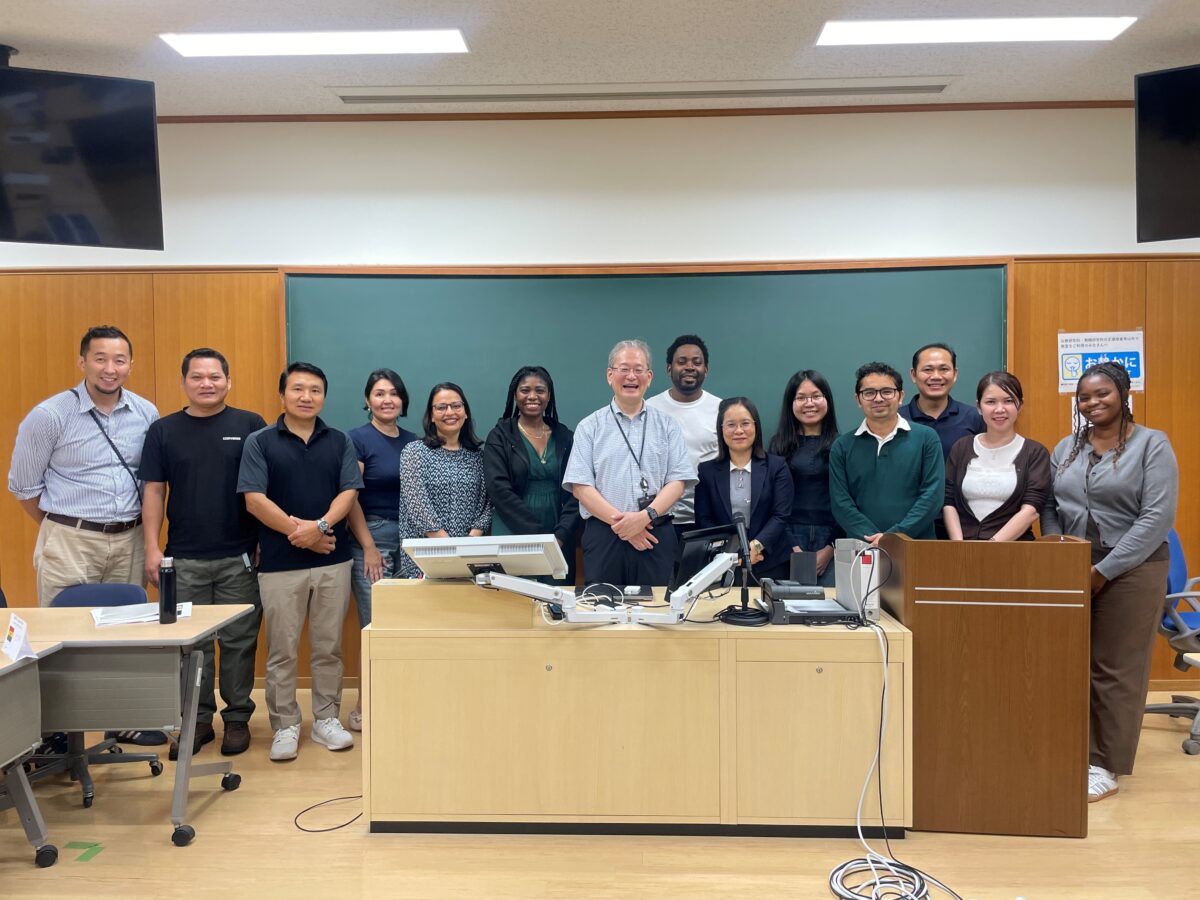
【Group photo】
Schedule
September 14 to 16, 2026
Course Leader
Takumi Hirai, Associate Professor, School of Social Informatics, Mukogawa Women’s University
Client Organization
The Ritsumeikan Trust
SDGs
Persons in Charge
Saga, Fukushima, Hazama
Instructor / Visited sites
7 lecturers from public institutions and private companies in Kyoto City

