

Category
Schedule
June 11th – July 7th, 2026 *Training period
Country / Member
- Ethiopia
- Samoa
- Solomon Islands
- Vanuatu
Target
For Government Officials and Business Leaders from Developing Countries
Participants
Government/public agency staff involved in export promotion activities, and executives in private organizations involved in export promotions (5 participants from 4 countries)
Export promotion plays a vital role in the economic development of many developing nations. However, most exports from these countries consist of raw materials rather than processed products. As a result, the lack of domestic value-added processes means that exports often fail to contribute to the growth of local industries. To promote exports in the global markets, it is essential to understand the target market needs through marketing, identify ways to add value to products, and meet the international quality standards. The primary objective of this training program was to learn export promotion strategies—such as selecting target markets for product development and promoting products effectively. Participants included government officials, public agency staff, and executives from private sector organizations involved in this program.
During the training course, participants used data to objectively assess the strengths and characteristics of products from their home countries. Based on a market-in approach that prioritizes needs, they explored methods for exporting and selling these products to target markets. They explored export strategies covering branding, marketing, promotion, and logistics, while developing their own action plans.
Company visits provided opportunities to gain deeper insights into practical methodologies through discussions and case studies of actual initiatives by both small and medium-sized enterprises (SMEs) and large corporations.
The program also covered global business frameworks and trends, addressing key considerations in business and trade, the impact of economic agreements, and value chain analysis—including topics such as human rights due diligence.
Participants spent about four weeks together and developed strong friendships. Through active exchanges of opinions and discussions, they made significant progress and, at times, reviewed and addressed their challenges with one another. The training course proved highly fruitful, thanks to the insightful advice provided to each participant by the course leader, Professor Goto of Kansai University, as well as the enthusiastic Q&A sessions with the lecturers.
Each participant will take back the action plans formulated during the training course and put them into practice in their home countries. We are looking forward to seeing their products because of their efforts—such as avocado oil (Ethiopia), cocoa butter (Samoa), coconuts (Solomon Islands), vanilla (Vanuatu), and tamanu oil (Vanuatu) —reach the market.
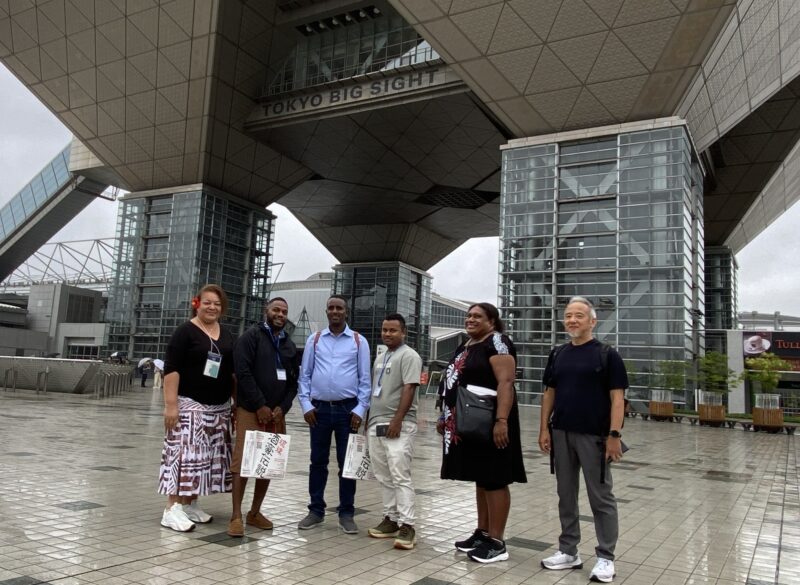
【In Front of Tokyo Big Sight】
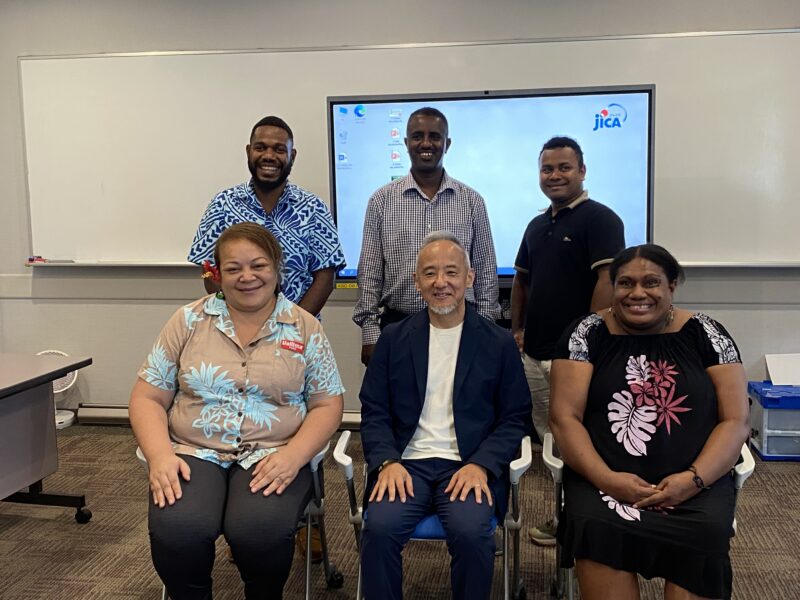
【After the Action Plan Presentation】
Schedule
June 11th – July 7th, 2026 *Training period
Course Leader
Kenta Goto (Professor, Faculty of Economics, Kansai University)
Client Organization
Kansai Center, Japan International Cooperation Agency (JICA Kansai)
SDGs
Persons in Charge
Yamauchi, Basnet, Kawaji
Instructor / Visited sites
17 lecturers and organizations visited, including government agencies, export promotion organizations, and private companies engaged in international business development

